
2022-08-17

|
|
When summer temperatures climb above 35°C, power grids enter one of the most demanding periods of the year. Electricity demand rises sharply, substations operate under heavier load, and aging assets face greater thermal stress. For utility maintenance teams, the challenge is not only higher power consumption. The bigger risk is that small defects can deteriorate faster under heat, load, humidity, and continuous operation. A weak connection may become an overheating point. In this environment, utilities need more than routine inspection. They need fast, non-contact, multi-dimensional fault detection that helps maintenance teams identify hidden risks before they become unplanned outages. |
Many power utilities still rely on separate inspection tools for different types of failures. Infrared thermal cameras are widely used to detect overheating. Acoustic imaging cameras are increasingly used to locate partial discharge, air leaks, and abnormal sound sources.
Each technology is valuable. But when used separately, they may not provide a complete view of asset health.
Thermal imaging can show temperature rise, but early-stage partial discharge may not produce a clear thermal signature.
Acoustic imaging can locate ultrasonic emissions, but it may not reveal abnormal heating, uneven load distribution, or cooling issues.
Manual cross-checking between different devices can slow down field work and increase the chance of missed correlations.
For modern grid inspection, the key question is no longer “sound or heat?”
The better question is: Can the inspection team see both at the same time?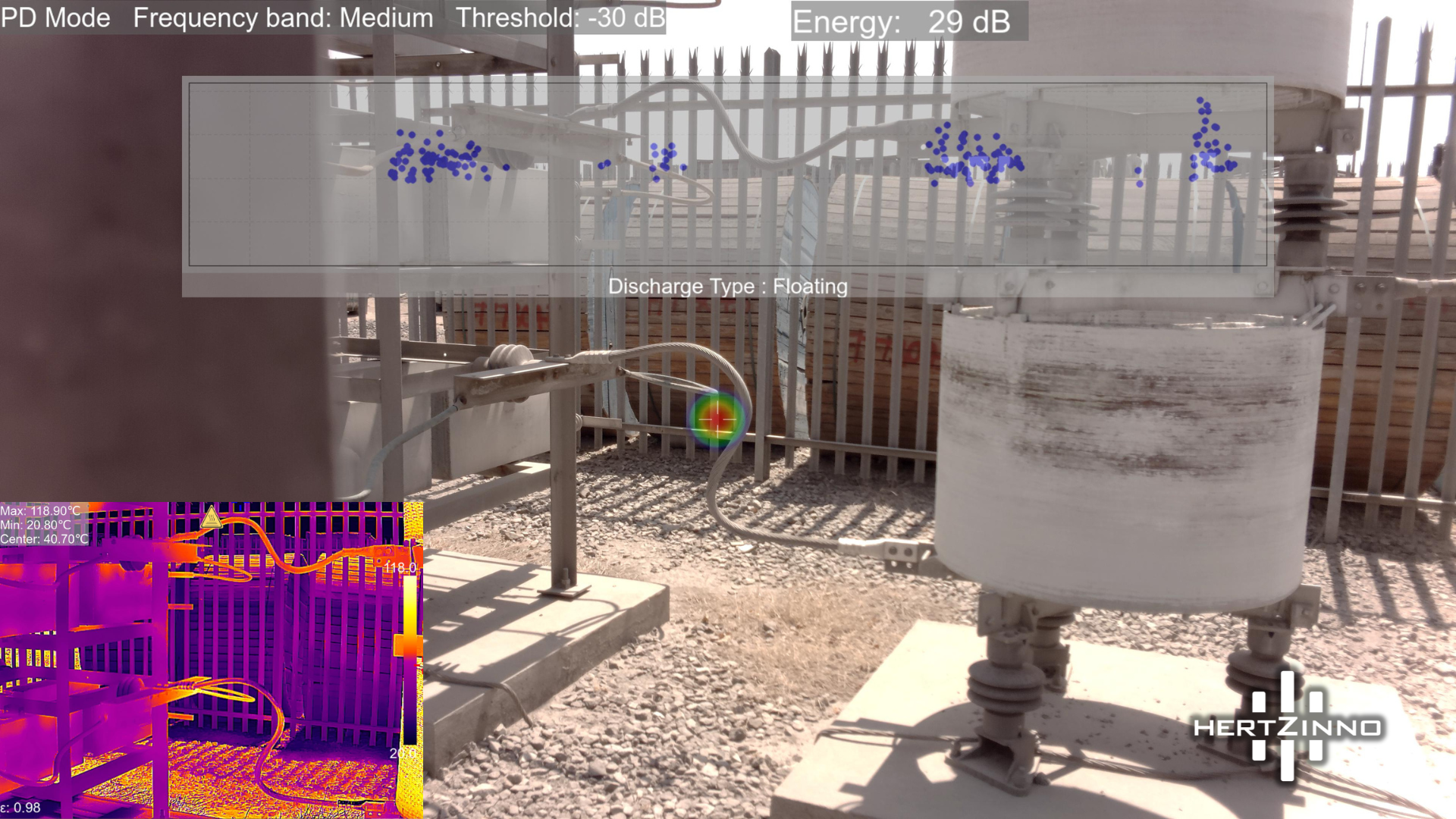
Across utilities, power generation, heavy industry, and energy infrastructure, maintenance teams are under pressure to improve reliability while reducing downtime.
They need inspection technologies that can help them:
This is where acoustic-thermal imaging becomes increasingly valuable.
By combining sound source localization with infrared temperature visualization, maintenance teams can inspect substations, transformers, switchgear, overhead lines, GIS equipment, insulators, industrial pipelines, and rotating equipment with greater confidence.
The HERTZINNO HA3T is a third-generation acoustic-thermal imaging system designed for power utilities, industrial maintenance teams, and energy infrastructure operators.
It integrates acoustic imaging, infrared thermal imaging, wide-frequency detection, and AI-powered partial discharge analysis into one portable inspection platform.
Instead of switching between separate devices, operators can use the HA3T to detect, locate, visualize, and analyze multiple fault types in real time.
Partial discharge and gas leakage signals can be weak, intermittent, and difficult to locate in noisy industrial environments.
The HA3T is equipped with a 144-channel low-noise MEMS microphone array, enabling high-resolution acoustic imaging and precise sound source localization.
For power grid inspection, this helps operators detect faint corona discharge, surface discharge, gas leaks, and abnormal mechanical sounds from a safe distance.
With a detection range of up to 210 meters, HA3T supports non-contact inspection of high-voltage assets, overhead lines, substations, and hard-to-access equipment.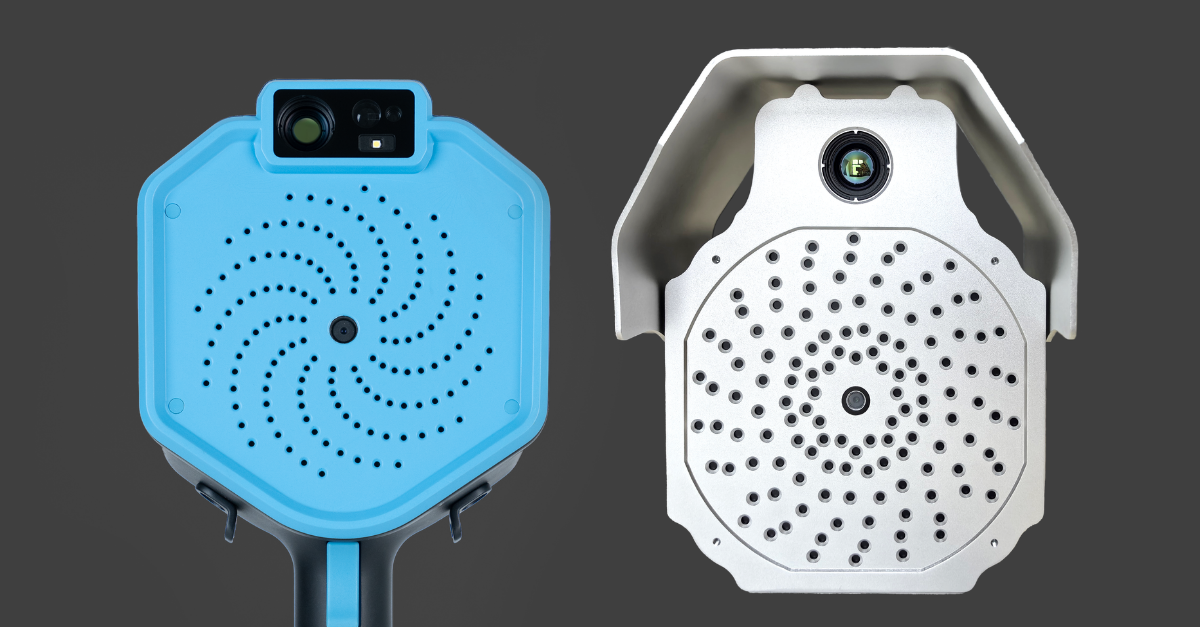
Electrical faults do not always appear as sound. Some risks appear first as heat.
Loose connections, overloaded components, cooling problems, and uneven load distribution can create thermal anomalies that require immediate attention.
HA3T features a 640×512 infrared thermal imaging module, allowing operators to view temperature distribution and acoustic source location on the same screen.
This real-time acoustic-thermal visualization helps maintenance teams answer important inspection questions quickly:
Is the sound source related to abnormal heat?
Is there overheating without a clear acoustic signal?
Is the risk electrical, thermal, mechanical, or combined?
Should this asset be monitored, repaired, or prioritized for urgent maintenance?
Different faults generate different frequency signatures.
Low-frequency signals may be associated with mechanical vibration or friction.
High-frequency ultrasonic signals may indicate partial discharge, compressed air leakage, gas leakage, or other hidden defects.
HA3T covers an ultra-wide frequency range from 2kHz to 150kHz, helping maintenance teams detect a broader range of faults across power and industrial applications.
This makes it suitable not only for electrical asset inspection, but also for industrial reliability programs that require leak detection, mechanical inspection, and condition monitoring.
Finding an abnormal signal is only the first step. For power utilities, the real value comes from understanding the type and severity of the fault.
HA3T supports built-in PRPD analysis powered by AI, helping operators classify partial discharge patterns such as:
This diagnostic capability helps maintenance teams move beyond simple detection. It supports faster decision-making, better maintenance prioritization, and more informed asset risk assessment.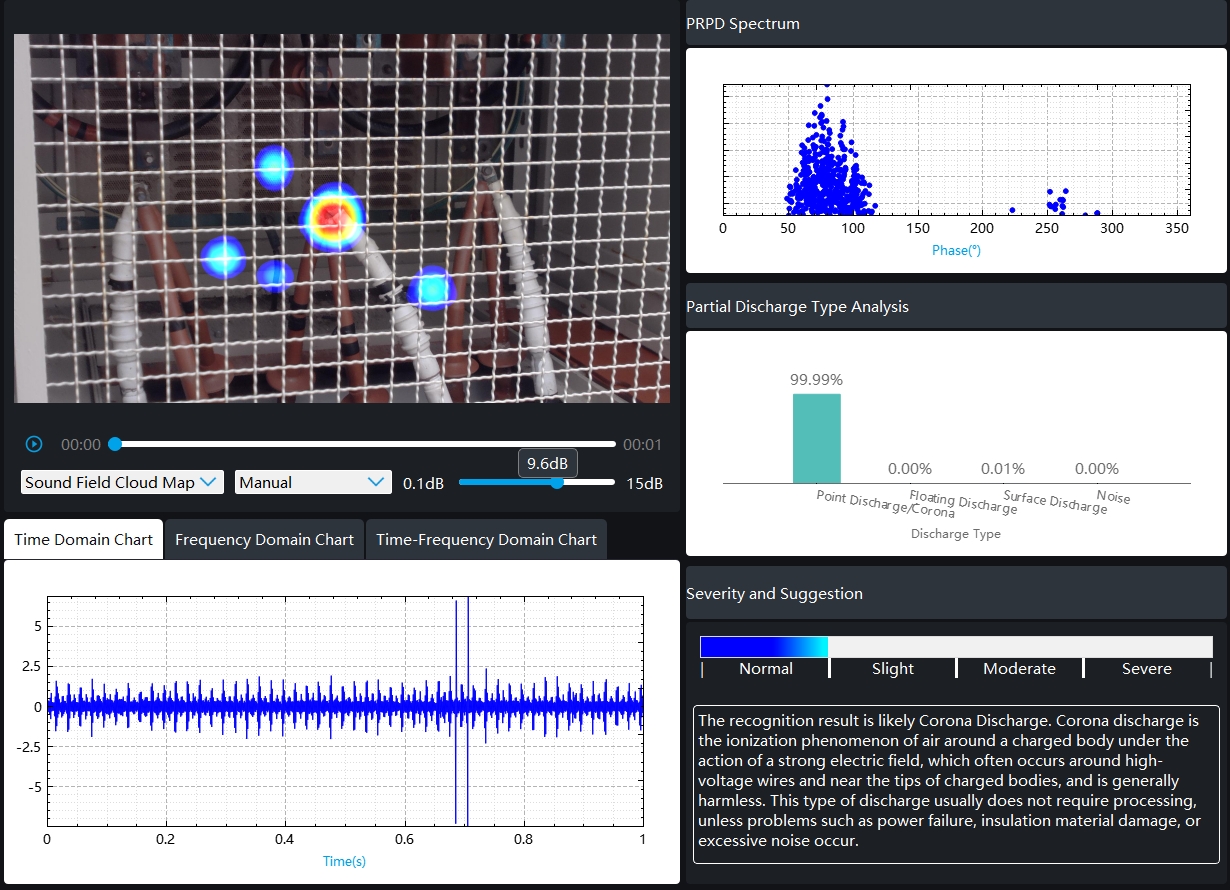
HA3T is designed for a wide range of inspection scenarios, including:
By supporting multiple applications in one platform, HA3T helps organizations improve inspection efficiency and reduce the need for multiple single-purpose tools.
During extreme heat, grid assets are exposed to higher operating stress. Maintenance teams need to detect risks earlier, inspect faster, and make better decisions with limited time and manpower.
Acoustic-thermal fusion gives operators a more complete understanding of equipment condition by combining two critical dimensions:
Acoustic data helps locate partial discharge, leaks, and abnormal sound sources.
Thermal data helps identify overheating, load imbalance, and cooling problems.
AI analysis helps interpret partial discharge patterns and support fault classification.
Together, these capabilities help utilities reduce hidden inspection blind spots and strengthen predictive maintenance programs before faults escalate.
As power grids face rising demand, aging infrastructure, and more frequent extreme weather conditions, utilities need inspection tools that can keep pace with modern reliability challenges.
The HERTZINNO HA3T acoustic-thermal imaging system helps maintenance teams detect hidden faults, visualize risk, and diagnose partial discharge more intelligently.
For utilities and industrial operators preparing for the summer peak season, HA3T provides a smarter way to inspect critical assets before small defects become major failures.
HERTZINNO HA3T — Acoustic-thermal intelligence for safer, faster, and more reliable power asset inspection.
