
Surface discharge is an electrical discharge phenomenon that occurs along the interface between a solid insulator and a gaseous or liquid dielectric. It is an important topic in high-voltage insulation technology because its discharge voltage is usually much lower than the breakdown voltage of the solid insulator itself and also lower than the breakdown voltage of a pure gas gap.
In high-voltage equipment, surface discharge can gradually damage insulation materials, reduce insulation performance, and in severe cases, lead to complete flashover and system failure.
The core mechanism of surface discharge is electric field distortion at the interface between different dielectric materials.
In many insulation systems, the solid insulator has a higher relative permittivity than the surrounding gas, such as air. Because of this difference in permittivity, electric field lines bend and concentrate near the interface. This creates local regions of enhanced electric field strength, especially near electrode edges, sharp points, defects, or contaminated surfaces.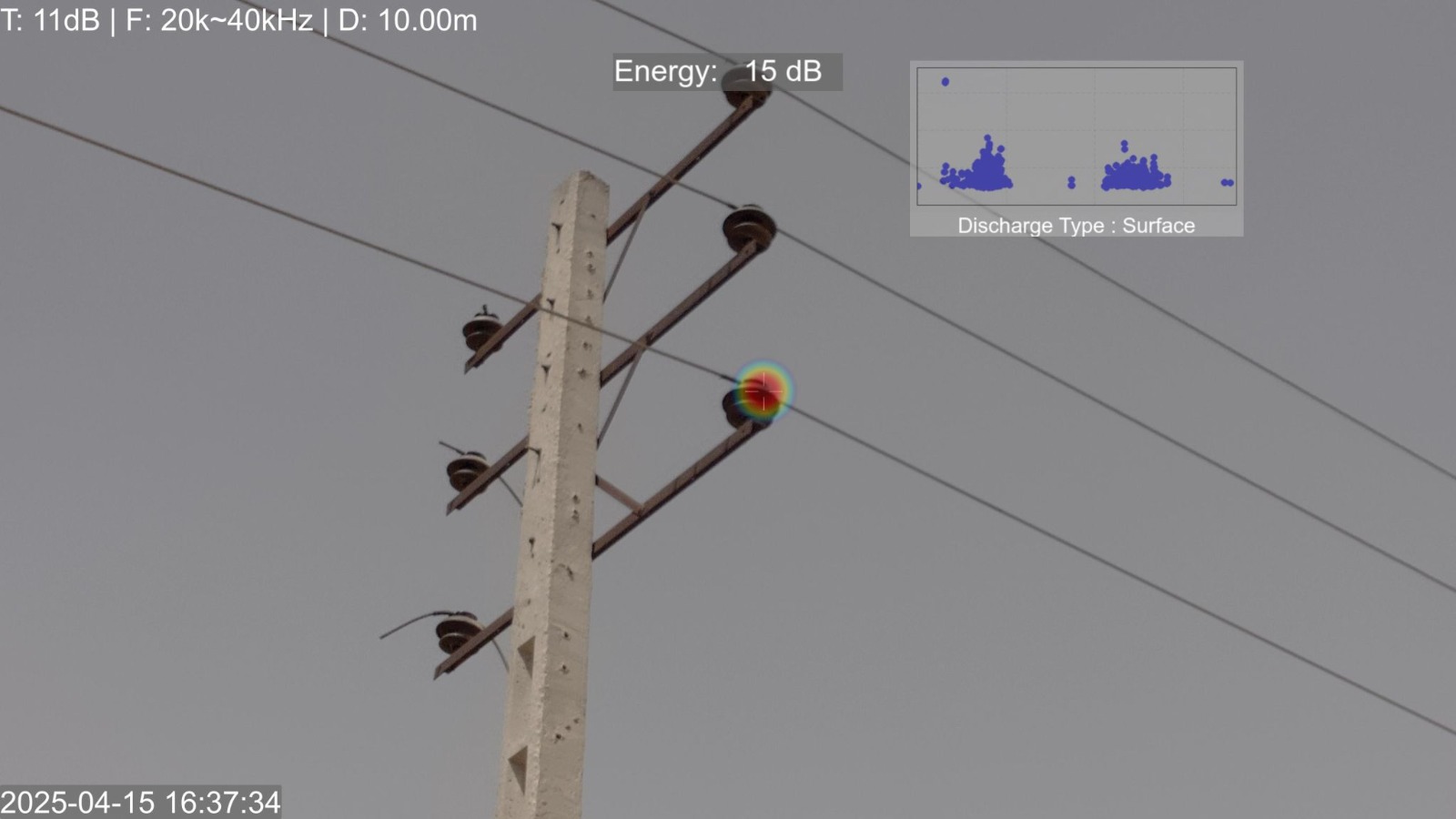
When the local electric field becomes strong enough, free electrons near the interface are accelerated. These electrons collide with gas molecules and generate more charged particles, forming an electron avalanche. As the process continues, discharge activity develops along the surface of the solid insulator.
Another important feature is surface charge accumulation. During discharge, ions and electrons are deposited on the surface of the insulator. These surface charges change the original electric field distribution and can either promote or suppress further discharge development, depending on their polarity and location.
Surface discharge usually develops in several stages as the applied voltage increases. Taking air as an example, the process can be divided into three typical stages.
The first stage is corona discharge. At this stage, weak local discharge occurs near electrode edges or high-field regions. The discharge is usually limited and does not yet extend across the full insulation surface.
The second stage is sliding discharge. As the voltage continues to increase, the discharge channel begins to extend along the surface of the insulator. Bright, filament-like discharge paths may appear and gradually grow toward the opposite electrode.
The final stage is flashover. Flashover occurs when the discharge channel bridges the entire electrode gap along the insulation surface. At this point, the insulation system loses its insulating function, resulting in complete insulation failure.
One of the most important parameters is flashover voltage. Flashover voltage refers to the critical voltage at which surface discharge develops into a complete conductive path across the insulation surface.
Surface discharge also shows a strong polarity effect under DC or impulse voltage. The inception voltage and flashover voltage under positive polarity may differ significantly from those under negative polarity. This is mainly related to the formation, distribution, and influence of surface charges.
Another important parameter is time lag. Time lag refers to the delay between voltage application and the occurrence of discharge or flashover. It is influenced by factors such as initial electron availability, surface condition, voltage waveform, and environmental conditions.
Surface discharge is influenced by both material properties and environmental conditions.
Relative permittivity plays an important role. A solid material with higher permittivity tends to cause stronger electric field distortion at the interface, which may reduce the flashover voltage.
Surface condition is also critical. A rough surface can create local electric field enhancement. Moisture, salt, dust, oil, or other contaminants can form conductive layers on the insulation surface, significantly reducing flashover voltage. This phenomenon is often referred to as pollution flashover.
Air pressure and temperature also affect discharge behavior. Lower air pressure or higher temperature reduces gas density, making it easier for discharge to initiate. This is similar to the behavior of corona discharge in air.
Voltage waveform is another important factor. Surface discharge characteristics can vary significantly under AC voltage, DC voltage, and lightning impulse voltage. Each waveform affects charge accumulation, discharge development, and flashover behavior differently.
Although surface discharge and corona discharge are both partial discharge phenomena, they occur in different locations and have different effects on equipment.
| Feature | Corona Discharge | Surface Discharge |
|---|---|---|
| Location | On conductor surface and surrounding air | Interface between solid insulator and gas/liquid |
| Dielectric medium | Fluid dielectric only (gas/liquid) | Solid + fluid (dual dielectric) |
| Hazard level | Primarily power loss and EMI | Easily causes insulation surface erosion or even complete flashover |
| Impact on equipment | Relatively slow chemical corrosion | Can lead to system failure within a very short time |
Surface discharge usually develops in several stages as the applied voltage increases. Taking air as an example, the process can be divided into three typical stages.
The first stage is corona discharge. At this stage, weak local discharge occurs near electrode edges or high-field regions. The discharge is usually limited and does not yet extend across the full insulation surface.
The second stage is sliding discharge. As the voltage continues to increase, the discharge channel begins to extend along the surface of the insulator. Bright, filament-like discharge paths may appear and gradually grow toward the opposite electrode.
The final stage is flashover. Flashover occurs when the discharge channel bridges the entire electrode gap along the insulation surface. At this point, the insulation system loses its insulating function, resulting in complete insulation failure.
One of the most important parameters is flashover voltage. Flashover voltage refers to the critical voltage at which surface discharge develops into a complete conductive path across the insulation surface.
Surface discharge also shows a strong polarity effect under DC or impulse voltage. The inception voltage and flashover voltage under positive polarity may differ significantly from those under negative polarity. This is mainly related to the formation, distribution, and influence of surface charges.
Another important parameter is time lag. Time lag refers to the delay between voltage application and the occurrence of discharge or flashover. It is influenced by factors such as initial electron availability, surface condition, voltage waveform, and environmental conditions.
Surface discharge is influenced by both material properties and environmental conditions.
Relative permittivity plays an important role. A solid material with higher permittivity tends to cause stronger electric field distortion at the interface, which may reduce the flashover voltage.
Surface condition is also critical. A rough surface can create local electric field enhancement. Moisture, salt, dust, oil, or other contaminants can form conductive layers on the insulation surface, significantly reducing flashover voltage. This phenomenon is often referred to as pollution flashover.
Air pressure and temperature also affect discharge behavior. Lower air pressure or higher temperature reduces gas density, making it easier for discharge to initiate. This is similar to the behavior of corona discharge in air.
Voltage waveform is another important factor. Surface discharge characteristics can vary significantly under AC voltage, DC voltage, and lightning impulse voltage. Each waveform affects charge accumulation, discharge development, and flashover behavior differently.
Although surface discharge and corona discharge are both partial discharge phenomena, they occur in different locations and have different effects on equipment.
Surface discharge is not only an electrical event. It also creates physical signals that can be detected.
During discharge, rapid ionization, electron movement, local heating, and micro-explosive expansion of gas occur in a very short time. These processes generate pressure waves and ultrasonic signals. In many cases, these ultrasonic signals are beyond the range of human hearing, but they can be captured by sensitive acoustic sensors.
Our camera detects these ultrasonic signals.
By using a microphone array, the camera receives discharge-related sound signals from multiple directions. Through acoustic imaging and beamforming algorithms, it calculates where the sound is coming from and overlays the discharge source onto the visible image.
This allows inspectors to see the location of a suspected discharge point instead of only hearing noise or guessing where the problem may be.
For high-voltage equipment inspection, this is highly valuable. Surface discharge may occur around insulator surfaces, cable terminations, switchgear components, transformer bushings, or other insulation structures. These locations can be difficult to inspect visually, especially when the discharge is weak or intermittent.
With acoustic imaging, inspectors can scan the equipment from a safe distance and quickly identify the possible discharge source.
Traditional discharge inspection often depends on experience, close-range checking, or indirect symptoms. But surface discharge can be hidden, intermittent, and difficult to locate with the naked eye.
Our camera helps make the inspection process more visual and more efficient.
It can help users:
Locate suspected discharge sources;
Identify abnormal ultrasonic signals from high-voltage equipment;
Inspect equipment from a safer distance;
Reduce manual troubleshooting time;
Record visual evidence for maintenance decisions;
Support preventive maintenance before serious insulation failure occurs.
The camera does not need to contact the equipment. It does not interrupt normal operation. It helps inspectors find where the discharge-related acoustic signal is coming from, so maintenance teams can focus on the exact component or area that may require attention.
Surface discharge is not only an electrical event. It also creates physical signals that can be detected.
During discharge, rapid ionization, electron movement, local heating, and micro-expansion of gas occur in a very short time. These processes generate pressure waves and ultrasonic signals. In many cases, these ultrasonic signals are beyond the range of human hearing, but they can be captured by sensitive acoustic sensors.
This is why acoustic cameras can be used for discharge detection.
By using a microphone array, an acoustic camera receives discharge-related ultrasonic signals from multiple directions. Through acoustic imaging and beamforming algorithms, it calculates where the sound is coming from and overlays the discharge source onto the visible image.
This allows inspectors to see the location of a suspected discharge point instead of only hearing noise or guessing where the problem may be.
For high-voltage equipment inspection, this is highly valuable. Surface discharge may occur around insulator surfaces, cable terminations, switchgear components, transformer bushings, or other insulation structures. These locations can be difficult to inspect visually, especially when the discharge is weak, intermittent, or hidden inside complex equipment structures.
For discharge inspection, locating the ultrasonic source is only the first step. A more advanced question is:
What type of discharge is it?
This is where HERTZINNO acoustic cameras provide a major advantage.
HERTZINNO acoustic cameras can not only locate discharge-related ultrasonic signals, but also support PRPD analysis. PRPD stands for Phase-Resolved Partial Discharge. It shows how discharge pulses are distributed over the phase of the power frequency cycle.
Different discharge types often have different PRPD patterns. For example, corona discharge, surface discharge, floating discharge, and noise-related signals may show different phase and energy distributions. By analyzing these patterns, the system can help users better understand the type and nature of the discharge.
This is especially important for surface discharge detection. Surface discharge may begin with weak and intermittent signals. If the system only detects whether sound exists, early-stage defects may be missed or difficult to classify. PRPD analysis provides an additional layer of diagnostic information.


