
Imagine turning an ordinary optical fiber—thin, passive, and often already installed along critical assets—into thousands of virtual sensors. Along the same fiber route, it can detect temperature rise, thermal anomalies, vibration, digging, vehicle movement, leakage-related acoustic patterns, and perimeter intrusion.
This is the value of distributed fiber optic sensing.
Instead of installing separate electronic sensors every few meters, distributed fiber optic sensing uses the optical fiber itself as the sensing medium. With one interrogator unit connected at the end of the fiber, operators can continuously monitor long-distance infrastructure such as power cables, pipelines, tunnels, utility corridors, perimeter routes, data centers, and oil and gas wells.
For industries where safety, uptime, and early warning matter, distributed fiber optic sensing is becoming a practical alternative to traditional point-based monitoring.
Distributed fiber optic sensing is a monitoring technology that converts a standard optical fiber into a continuous sensing line. The system sends laser pulses into the fiber and analyzes the weak backscattered light returning from different positions along the route.
Because the return time of the light corresponds to distance, the system can determine where an event happens. Because the optical signal changes with temperature, vibration, strain, or acoustic disturbance, the system can also determine what is happening.
In other words, a single fiber can provide continuous visibility along the entire monitored asset. Every meter of the fiber can become part of the sensing network, without requiring powered electronics in the field.
This makes distributed fiber optic sensing especially valuable for harsh, remote, high-voltage, underground, or hazardous environments.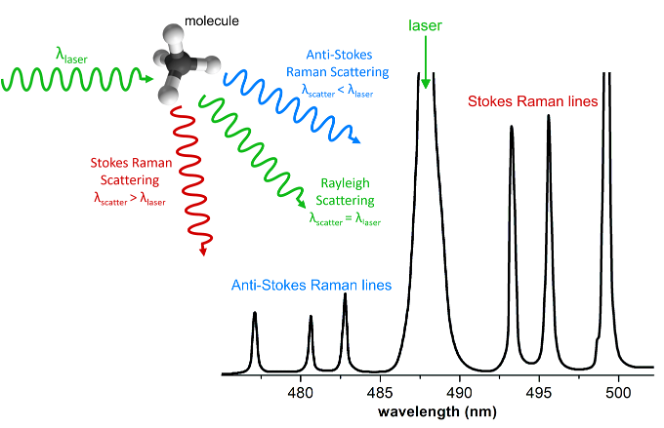
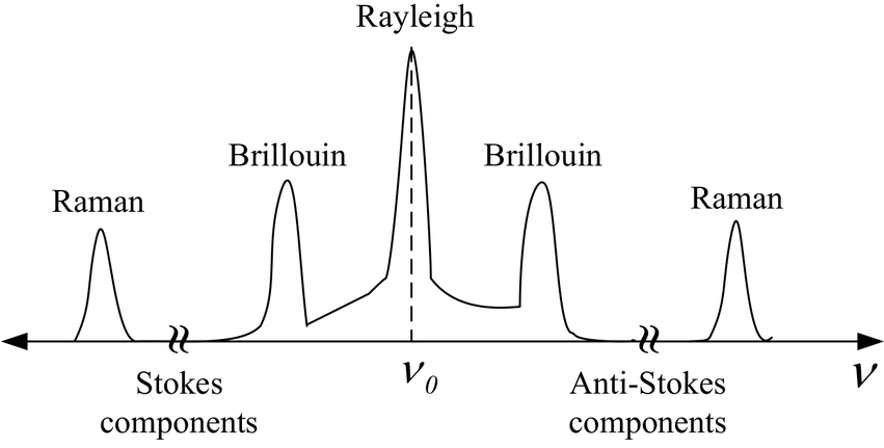
The principle behind distributed fiber optic sensing is optical backscattering. When light travels through glass fiber, a tiny portion of the light is scattered back toward the source. Different types of scattering reveal different physical changes along the fiber.
Distributed Acoustic Sensing, or DAS, is mainly based on Rayleigh backscattering. When vibration, sound pressure, digging, footsteps, vehicle movement, mechanical impact, or leakage-related acoustic energy acts on the fiber, it creates small phase changes in the backscattered light.
By analyzing these phase changes, a DAS system can detect, locate, and classify vibration or acoustic events along the fiber route.
HERTZINNO HZ-iDAS uses this principle to turn optical fiber into a long-distance acoustic and vibration sensor for pipeline security, perimeter protection, conveyor monitoring, cable route disturbance detection, and critical infrastructure protection.
Distributed Temperature Sensing, or DTS, is based on Raman backscattering. When laser pulses travel through the fiber, the returned Raman signal includes Stokes and Anti-Stokes components. The Anti-Stokes component is highly sensitive to temperature, so the system calculates the temperature profile by comparing the signal ratio at each location.
HERTZINNO HZ-DTS uses Raman OTDR technology to provide real-time, online, and continuous temperature monitoring for power cables, data centers, pipelines, substations, tunnels, utility corridors, and industrial fire-risk areas.
Brillouin scattering is commonly used for distributed strain and temperature sensing. It is valuable in structural health monitoring, ground movement detection, pipeline deformation monitoring, and large civil infrastructure projects.
In many real projects, DTS, DAS, and distributed strain sensing can complement one another, creating a more complete picture of asset health.
Although both technologies use optical fiber as the sensor, DTS and DAS are designed for different monitoring targets.
DTS measures temperature changes along the fiber. It is used when the risk or fault condition creates a thermal signature.
Typical DTS monitoring targets include:
Power cable overheating
Cable tunnel and joint temperature rise
Data center cable route and busbar thermal risk
Pipeline leakage-related temperature anomalies
Tunnel and utility corridor fire detection
Energy storage and industrial thermal safety monitoring
Compared with point temperature sensors, DTS provides a continuous temperature profile. This means operators are no longer limited to isolated measurement points. Hotspots between sensors can be detected and located.
For example, in underground power cable monitoring, a localized hotspot may appear at a cable joint, a poorly backfilled section, or a congested cable trench. With point sensors, that hotspot may be missed if it occurs between two sensor locations. With DTS, the entire cable path is monitored continuously.
HERTZINNO HZ-DTS is designed for real-time thermal monitoring of critical infrastructure. Depending on configuration, it supports multi-channel monitoring, meter-level positioning, high temperature resolution, and passive sensing fiber deployment without field power.
DAS detects vibration and acoustic events along the fiber. It is used when the target event creates mechanical disturbance or sound energy.
Typical DAS monitoring targets include:
Mechanical digging near pipelines
Manual excavation and impact events
Vehicle movement along protected routes
Perimeter intrusion, fence climbing, or cutting
Pipeline interference and leakage-related vibration
Cable corridor disturbance
Conveyor belt roller abnormal sound
Critical infrastructure route security
DAS turns the fiber into a continuous acoustic and vibration sensor. It does not rely on thousands of microphones or powered vibration sensors in the field. Instead, the fiber itself captures the disturbance, while the interrogator analyzes phase, time-domain, frequency-domain, and spatial patterns.
HERTZINNO HZ-iDAS Series provides model options for different route lengths and event types, including short-distance high-bandwidth acoustic monitoring, medium-distance pipeline and perimeter monitoring, and long-distance infrastructure protection.
With intelligent pattern recognition, DAS can help operators distinguish between real threats and environmental noise. For example, it can help classify whether an event is caused by mechanical digging, manual digging, vehicle passing, perimeter intrusion, or abnormal mechanical sound.
The easiest way to choose between DTS and DAS is to ask what the target event produces.
Choose DTS when the event creates a temperature change.
Choose DAS when the event creates vibration, sound, or mechanical disturbance.
For power cable overheating, tunnel fire risk, data center thermal monitoring, and pipeline thermal leakage patterns, DTS is usually the first choice.
For pipeline third-party interference, perimeter intrusion, digging detection, cable route disturbance, conveyor belt abnormal sound, and acoustic event localization, DAS is usually the better fit.
For oil and gas pipelines, long-distance corridors, and complex critical infrastructure routes, DTS and DAS are often used together. DTS provides thermal visibility, while DAS provides acoustic and vibration awareness. Together, they help operators detect both the consequence and the cause of a developing risk.
Traditional monitoring systems rely on discrete sensors. Each sensor measures one location. To monitor a long cable, pipeline, tunnel, or perimeter, operators need to install many devices, power lines, communication lines, and protective enclosures.
Distributed fiber optic sensing changes this model.
Instead of many powered field sensors, one passive optical fiber can monitor the entire route. This creates several practical advantages.
First, it reduces blind spots. The sensing fiber continuously monitors the route, rather than only checking selected positions.
Second, it improves field reliability. The sensing cable contains no active electronics in the sensing zone, which makes it suitable for high-voltage, underground, explosive, corrosive, or remote environments.
Third, it simplifies installation. A single fiber route can replace large numbers of point sensors and cables.
Fourth, it supports long-distance monitoring. DAS can cover long perimeter or pipeline routes, while DTS can continuously monitor thermal assets such as cable tunnels, data centers, and industrial facilities.
Finally, it enables richer data. Operators receive not only alarm signals, but also event location, temperature trends, vibration patterns, frequency features, and historical route-level information.
Power cables are sensitive to overheating. Excessive temperature can accelerate insulation aging, reduce cable life, and increase failure risk.
DTS provides a real-time temperature profile along the cable route. Operators can detect hotspots, monitor cable joints, evaluate thermal loading, and identify abnormal temperature rise before it develops into failure.
For underground cables, cable tunnels, substations, and utility corridors, this continuous visibility is a major improvement over point-based temperature monitoring.
Pipelines face both internal and external risks. Leaks may create thermal or acoustic anomalies, while unauthorized digging or construction can damage the pipeline before a leak occurs.
DAS detects vibration events such as mechanical excavation, manual digging, vehicle movement, and impact. DTS detects temperature anomalies that may be associated with leakage or thermal changes along the pipeline.
Together, DAS and DTS provide a more complete monitoring layer for oil, gas, water, and industrial pipeline systems.
In tunnels and utility corridors, smoke detection can be affected by airflow, ventilation, and complex geometry. DTS offers linear heat detection along the route and can locate thermal events with meter-level precision.
This makes it suitable for road tunnels, rail tunnels, cable tunnels, underground utility corridors, conveyor galleries, and industrial facilities where early heat detection is critical.
A buried or fence-mounted DAS fiber can detect footsteps, climbing, fence cutting, vehicle movement, and digging. This makes it useful for airports, industrial parks, energy facilities, borders, substations, and remote unmanned sites.
With intelligent event classification, DAS can reduce false alarms by distinguishing between real intrusion events and environmental disturbances such as wind, rain, or harmless background vibration.
In mining, ports, power plants, and bulk material handling systems, conveyor belt failure can cause long downtime and safety risks.
DAS can detect abnormal sound and vibration patterns from rollers, bearings, friction points, and mechanical components. Because the fiber monitors along the route, the system can help locate the fault area and support predictive maintenance.
Data centers depend on stable power and cooling infrastructure. Thermal abnormalities in power cables, busbars, battery rooms, liquid cooling routes, or distribution areas can become serious operational risks.
DTS provides continuous temperature monitoring along critical routes, helping operators identify early thermal changes and improve reliability.
The value of distributed fiber optic sensing is not only that it detects events. It also provides location, trend, and pattern information.
A DTS system can show where temperature is rising and how fast it is changing. A DAS system can show where vibration occurs, how it evolves over time, and what type of event it resembles.
When combined with visualization software, alarm logic, and AI-based event classification, distributed fiber optic sensing becomes an intelligent early-warning system for critical infrastructure.
Operators can move from reactive maintenance to proactive risk control.
HERTZINNO provides distributed fiber optic sensing solutions for temperature, vibration, acoustic, and well logging applications.
HZ-DTS is designed for distributed temperature monitoring. It uses Raman OTDR technology to monitor temperature changes along power cables, data centers, pipelines, tunnels, substations, and critical infrastructure routes.
HZ-iDAS is designed for distributed acoustic and vibration monitoring. It uses Rayleigh backscattering phase analysis to detect and locate vibration, intrusion, digging, vehicle movement, leakage-related acoustic patterns, and mechanical abnormal sounds.
For oil and gas well logging and reservoir monitoring, HERTZINNO also provides high-fidelity fiber optic well monitoring solutions that combine distributed acoustic and temperature sensing for downhole and long-distance applications.
Distributed fiber optic sensing turns optical fiber into a continuous safety network. DTS allows operators to see heat along the entire route. DAS allows operators to listen for vibration, disturbance, and acoustic events. Together, they provide long-distance, passive, real-time monitoring for the infrastructure that modern society depends on.
From power cables and pipelines to tunnels, data centers, perimeters, conveyors, and oil and gas wells, distributed fiber optic sensing helps operators detect risks earlier, locate events faster, and protect assets more effectively.
For projects that require continuous monitoring with fewer blind spots and fewer field electronics, DTS and DAS are no longer future technologies. They are practical tools for building safer, smarter, and more reliable infrastructure.


