
In the acoustic imaging market, a “pocket-sized acoustic camera” may sound highly attractive. It is compact, lightweight, and easy to carry, which seems to match the field inspection team’s demand for portability. However, in real industrial inspection scenarios, the value of an acoustic camera is not defined by whether it can fit into a pocket. Its value lies in whether it can accurately detect problems, locate sound sources, and support reliable maintenance decisions in complex environments.
HERTZINNO does not launch a pocket-sized acoustic camera not because portability is unimportant, but because acoustic imaging systems are governed by clear physical limits. Once a microphone array is excessively miniaturized, spatial resolution, localization accuracy, beamforming performance, detection sensitivity, and real-source identification will all be significantly constrained.
For industrial applications such as compressed air leak detection, gas leak localization, partial discharge inspection, and abnormal mechanical noise identification, reliability is more important than extreme miniaturization. A pocket-sized acoustic camera may be convenient to carry, but in many critical scenarios, it may not meet industrial requirements for accuracy and stability.
Such like the noise strong like the below video:
The core of an acoustic camera is the microphone array. By receiving sound signals through multiple microphones and analyzing time differences, phase differences, and sound pressure differences, the system uses beamforming algorithms to calculate the sound source direction and generate an acoustic image.
In this process, the array size, or acoustic aperture, has a decisive influence on spatial resolution. In general, the larger the array aperture, the stronger the ability to distinguish sound sources from different directions. The smaller the aperture, the more blurred the acoustic image becomes.
When an acoustic camera is compressed into a pocket-sized form factor, the spatial differences among microphones become smaller. The system receives less directional information, which eventually reduces localization accuracy.
In industrial sites, leaks, partial discharge points, friction points, and abnormal noise sources are often located at a specific valve, flange, connector, seal, insulator, or machine component. Users need the acoustic camera to identify the actual problem location, not just display a vague hot area.
If the array is too small, the acoustic hotspot becomes wider and less precise. Localization may degrade from “specific component” to “general area,” reducing troubleshooting efficiency and increasing the risk of misjudgment.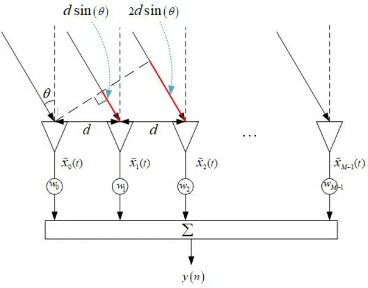
Acoustic cameras rely on beamforming to localize sound sources. In simple terms, the system spatially focuses the sound received by the microphone array to determine the main direction of the sound source.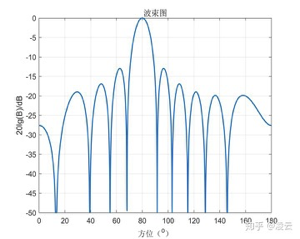
Ideally, the beamforming result should have a clear main lobe and low side lobes. The main lobe represents the direction of the real source, while side lobes are secondary responses generated by the array structure and signal processing. A narrower main lobe improves localization accuracy, while lower side lobes reduce false hotspots.
When the microphone array is too small and the aperture is insufficient, the beam becomes wider. As the beam widens, the system’s ability to distinguish directions decreases, and hotspots in the acoustic image expand.
For industrial leak detection, this creates a serious issue: real leaks become harder to distinguish from pseudo sound fields.
Industrial environments are not quiet laboratories. Compressors, fans, motors, airflow, pipe vibration, reflections, and background noise can all affect detection results. If the beam is too wide, the acoustic image may show large blurred areas and may even misidentify reflections, environmental noise, or side-lobe responses as real leaks.
A pocket-sized acoustic camera may be able to “visualize sound,” but it may not reliably determine which sound is the true problem source. For industrial users, this uncertainty directly affects maintenance decisions.
In microphone array design, the relationship between element spacing and sound wavelength is critical. To avoid spatial aliasing, microphone spacing should generally be smaller than or close to half the target wavelength:
d ≤ λ / 2
Here, d is the element spacing and λ is the sound wavelength. The higher the frequency, the shorter the wavelength; the lower the frequency, the longer the wavelength.
If the element spacing is too large, high-frequency detection may suffer from spatial aliasing, resulting in incorrect source localization or even false sound sources. Therefore, in theory, reducing element spacing helps support high-frequency signal detection and reduces the risk of high-frequency spatial aliasing.
However, this does not mean a pocket-sized acoustic camera gains an advantage in high-frequency detection. When microphones are densely packed into a very small device, the element spacing is reduced, but the overall array aperture is also reduced. Once the aperture becomes smaller, spatial resolution, beam focusing ability, and array gain are all limited.
More importantly, high-frequency sound attenuates faster in air than low-frequency sound. Leak signals and partial discharge signals often contain high-frequency or ultrasonic components, but these components lose energy rapidly as propagation distance increases.
Due to its small array size and limited effective receiving aperture, a pocket-sized acoustic camera has insufficient ability to capture and enhance weak high-frequency signals from longer distances. As a result, even if the microphone spacing is suitable for high-frequency sampling, stable detection may still not be achievable.
This creates the core contradiction of pocket-sized acoustic cameras in high-frequency inspection: smaller spacing helps sample high-frequency signals, but a smaller overall aperture reduces spatial resolution and array gain; high-frequency attenuation further shortens effective detection distance; users may have to move closer to the target to increase detection probability; yet in real industrial sites, targets are not always accessible, and background noise is complex. If sensitivity is insufficient, the system cannot be used reliably.
In addition to reduced localization accuracy, pocket-sized acoustic cameras also face reduced detection sensitivity.
When detecting weak sound sources, an acoustic camera does not rely only on the sensitivity of individual microphones. It also relies on the entire array’s ability to enhance sound from the target direction. A properly sized array and well-designed microphone distribution can provide better array gain, helping extract weak abnormal sounds from background noise.
When the array is compressed into a pocket-sized device, the aperture becomes smaller and the available spatial information decreases. The array’s ability to focus on the target source is weakened. As a result, when facing long-distance leaks, small leaks, early-stage leaks, or low signal-to-noise environments, the device is more likely to suffer from unstable detection, shorter detection range, or missed detections.
In industrial leak detection, many leaks are not strong sound sources. Early leaks, small-hole leaks, and long-distance leaks produce relatively weak acoustic signals. If detection sensitivity is insufficient, the device may only detect obvious leaks while missing early-stage problems.
This is unacceptable for industrial users. One of the core values of an acoustic camera is to help users identify risks early, reduce energy waste, lower downtime risks, and improve inspection efficiency. If miniaturization sacrifices sensitivity, the industrial value of the device is weakened.
The main advantage of pocket-sized acoustic cameras is portability, but industrial inspection requires much more than portability.
In compressed air systems, users need to quickly find small leak points and assess their location and severity. In power equipment inspection, users need to identify corona discharge, floating discharge, surface discharge, and other abnormal acoustic sources. In mechanical inspection, users need to distinguish real abnormal components from complex background noise.
These scenarios share several characteristics: detection distance is variable, background noise is complex, abnormal sources are often very small, and detection results influence maintenance decisions.
If a device is compact but inaccurate, insensitive, and weak in sound source discrimination, it cannot truly meet industrial requirements. Portability matters, but reliability is the core of an industrial acoustic camera.
HERTZINNO does not deny the importance of portability. For field inspection teams, lighter devices improve user experience and inspection efficiency. However, portability must be built on reliable acoustic performance.
An acoustic camera is not a consumer electronic product or a simple visualization tool. It is an industrial diagnostic instrument used for field decision-making. For this type of device, value should not be judged only by size, but by whether it can reliably complete inspection tasks in real environments.
HERTZINNO does not launch a pocket-sized acoustic camera because an overly small array reduces spatial resolution; insufficient aperture reduces localization accuracy; wider beams weaken the ability to distinguish real sources from pseudo sound fields; main lobes and side lobes become harder to separate; the half-wavelength relationship limits the effective frequency range; high-frequency sound attenuates rapidly in air; reduced array gain lowers detection sensitivity; and small leaks, long-distance leaks, and early abnormalities become easier to miss.
Therefore, HERTZINNO chooses not extreme miniaturization, but a balanced design between portability, array size, acoustic performance, and industrial reliability. The product may not be the smallest, but it is more suitable for real industrial sites. It may not fit into a pocket, but it can better help users detect problems accurately and take action quickly.
Pocket-sized acoustic cameras may appear to represent a portability trend, but in industrial acoustic inspection, smaller does not always mean better. Acoustic imaging is limited by physical factors such as array aperture, microphone spacing, sound wavelength, beamforming, signal-to-noise ratio, and high-frequency air attenuation.
HERTZINNO does not launch a pocket-sized acoustic camera because it insists on the accuracy, sensitivity, and reliability required by industrial inspection equipment.
For real industrial applications, the core value of an acoustic camera is not whether it can fit into a pocket. Its value lies in whether it can detect weak abnormalities, accurately localize sound sources, distinguish real problems from pseudo sound fields, and provide trustworthy inspection results.
HERTZINNO’s product direction is not “minimum size,” but an engineering solution that is effective, accurate, and reliable.


