
Natural gas leak detection is one of the most important safety tasks in oil and gas production. Gas leaks can occur around gas well Christmas trees, wellhead valves, flanges, fittings, pipeline connections and other high-pressure components. If not detected early, these leaks may lead to gas loss, safety incidents, environmental risks and unplanned maintenance costs.
However, monitoring natural gas wells is not easy. Many gas wells are widely distributed across remote areas such as fields, mountains, deserts and unmanned production sites. Manual patrols are time-consuming, costly and difficult to maintain around the clock. Traditional gas detection methods, such as point gas detectors or concentration-based monitoring, can also be affected by wind direction, sensor location, rain, dust and open outdoor environments.
Acoustic gas leak detection provides a different approach.
Instead of waiting for gas to accumulate near a sensor, acoustic fingerprint monitoring listens for the sound and ultrasonic signals generated by pressurized gas leakage. By combining high-sensitivity acoustic sensors with edge AI algorithms, the system can identify leak-related acoustic patterns and send real-time alarms for natural gas wells, wellheads and pipeline stations.
When natural gas escapes from a small opening, valve gap, flange connection, seal defect or pipeline crack, the pressure difference between the inside of the pipe and the outside environment creates a high-speed gas jet.
This jet disturbs the airflow and generates turbulence. At the same time, friction between the gas flow, pipe wall and leak edge can create vibration and stress waves. These physical effects generate sound and ultrasonic signals.
The acoustic pattern of a normal wellhead area is different from the acoustic pattern of a leaking wellhead or valve. This difference is what we call an acoustic fingerprint.
For gas well leak detection, acoustic fingerprints can be used to identify abnormal leak signals even when the leak is difficult to hear by human ears or difficult to detect with a conventional point sensor.
Acoustic fingerprint gas leak detection is a monitoring method that captures sound signals from industrial equipment and uses signal processing and AI recognition to identify leak-specific features.
High-sensitivity acoustic sensors continuously capture sound signals around the natural gas well, wellhead Christmas tree, valve area or pipeline connection. These sensors can monitor both audible and ultrasonic frequency ranges, helping detect signals that may not be clearly recognized by human hearing.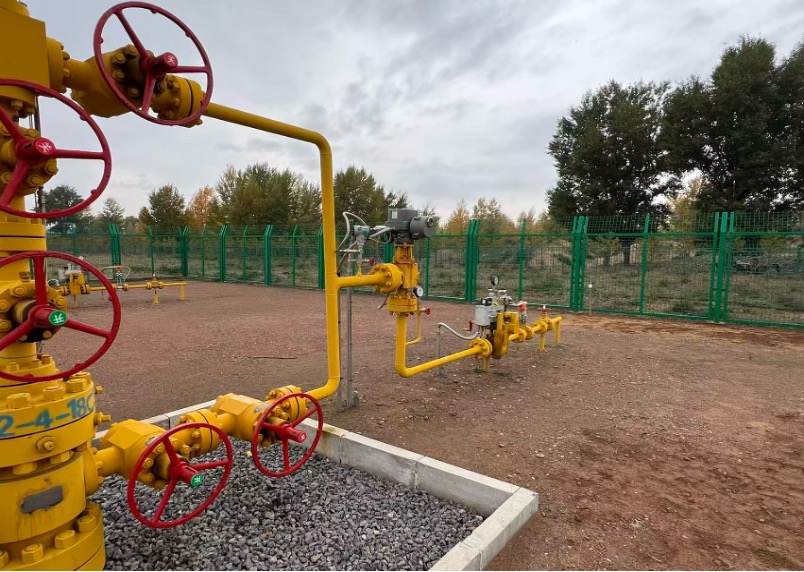
The system analyzes the captured sound and extracts acoustic features related to pressurized gas leakage. At the same time, it filters out environmental noise such as wind, rain, insects, vehicles and normal equipment operation.
Instead of relying only on remote cloud analysis, the system performs AI inference directly on the edge device. This allows faster local recognition of leak-related acoustic fingerprints and reduces dependency on network conditions.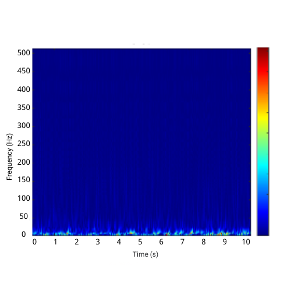
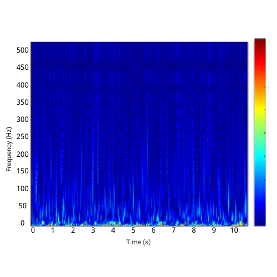
Once a suspected gas leak is identified, the system can send an alarm through 4G, Ethernet or an industrial IoT platform. Operators can receive alerts remotely and respond quickly to potential leak risks.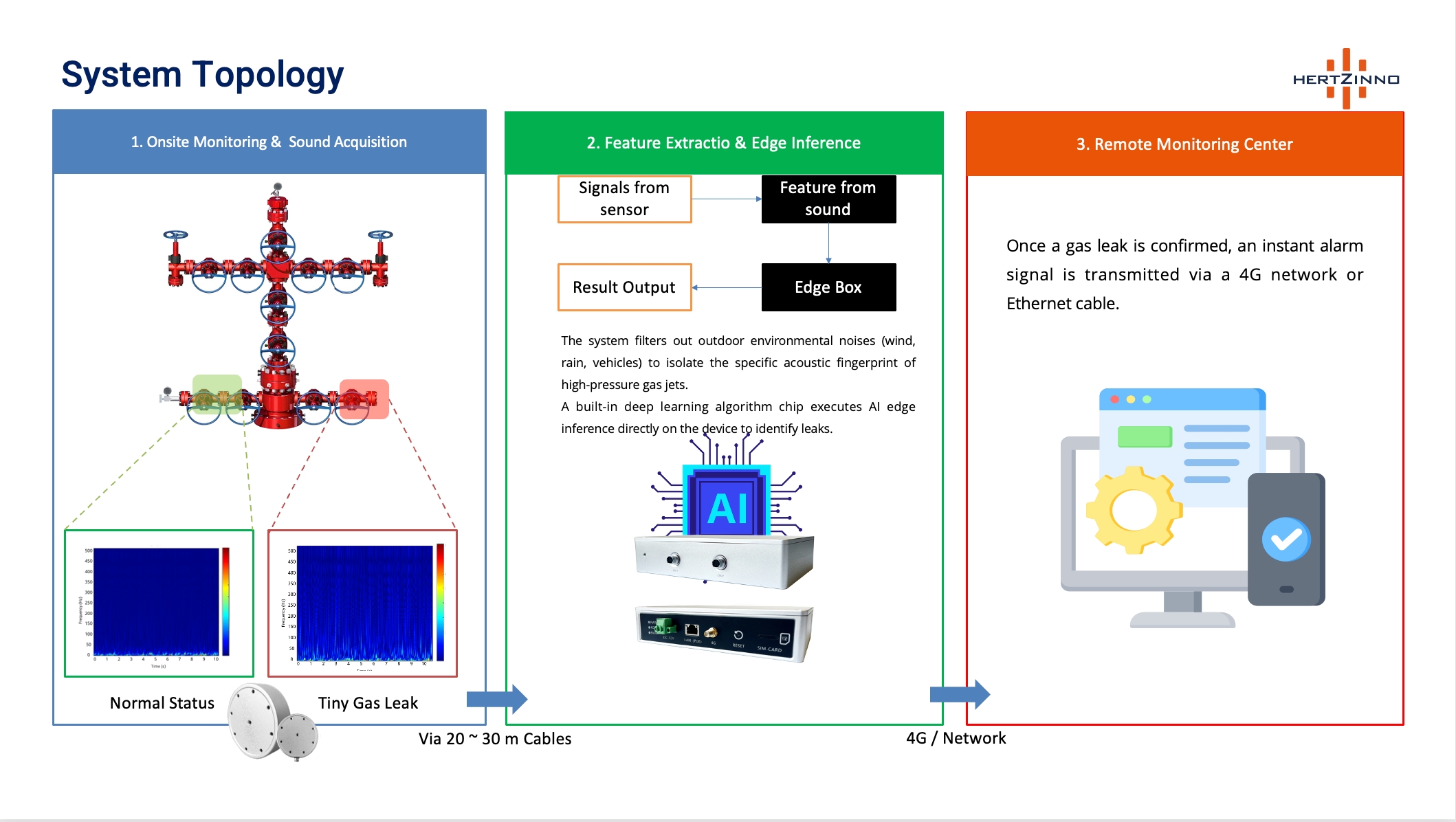
The gas well Christmas tree is one of the most important areas for leak monitoring. It includes multiple valves, fittings and pressure control components. Because these parts are exposed to high-pressure natural gas and frequent operating conditions, small leaks may occur around sealing surfaces, valve stems, connectors or flange joints.
Manual listening is not reliable in these environments. Some leaks may be difficult to hear, especially when background noise is present. Other leaks may generate stronger ultrasonic energy than audible sound.
Acoustic fingerprint monitoring helps identify these leak-related signals and provides early warning before the leak develops into a larger problem.
For wellhead Christmas tree leak detection, acoustic monitoring can help operators:
Monitor valve areas continuously
Detect abnormal leak sounds earlier
Reduce manual inspection frequency
Support remote gas well management
Improve response time for maintenance teams
Strengthen methane leak monitoring and safety control
Traditional gas detectors usually measure gas concentration at a specific point. This method is useful, but it has limitations in open outdoor environments. Wind direction, sensor height, sensor distance and leak location can all affect whether gas reaches the detector.
Acoustic monitoring uses a different principle. It detects the sound source created by pressurized leakage. This means it can help identify a leak event before gas concentration accumulates at a point detector.
The two methods are not contradictory. In many oil and gas applications, acoustic monitoring can be used for early warning, while methane sensors, TDLAS instruments or handheld detectors can be used for follow-up verification.
A practical workflow can be:
Acoustic system detects abnormal leak fingerprint.
Remote alarm is sent to the monitoring platform.
Operators dispatch inspection or maintenance personnel.
Methane concentration is verified with gas detection instruments.
Maintenance teams repair and confirm the leak point.
This workflow helps improve both safety response and inspection efficiency.
Acoustic fingerprint gas leak detection can be used in many oil and gas scenarios, including:
Natural gas well leak detection
Gas well Christmas tree monitoring
Wellhead valve leak detection
Valve and flange leak monitoring
Pipeline connection leak detection
Pipeline station monitoring
Compressor station leak monitoring
Remote gas field safety monitoring
Methane leak monitoring
Fugitive emission risk monitoring
Oil and gas unmanned site monitoring
Natural gas leak detection is becoming increasingly important for oil and gas safety, methane emission control and digital field management. For remote gas wells and wellhead equipment, manual inspection alone is no longer enough to meet the demand for continuous, real-time monitoring.
Acoustic fingerprint recognition provides a practical and scalable solution.
By capturing the sound and ultrasonic signatures generated by pressurized gas leakage, and by using edge AI to identify leak-related patterns, acoustic gas leak detection helps operators monitor natural gas wells, wellhead Christmas trees, valves and pipeline connections more efficiently.
For oil and gas companies looking to improve leak detection, reduce manual inspection workload and strengthen methane monitoring, acoustic fingerprint monitoring offers a powerful path toward safer and smarter gas field operations.


